

info@redroofclinic.co.uk
Call: 01522 722595
Bar Ln, Waddington, LN5 9SA
info@redroofclinic.co.uk Call: 01522 722595 Bar Ln, Waddington, LN5 9SA
Diabetic Assessment
Protecting Your Foot Health
Diabetes can affect the circulation, sensation and healing ability of your feet, increasing the risk of complications such as ulcers, infections and foot injuries. Regular podiatry care plays an important role in identifying potential problems early and helping to keep your feet healthy.
At Red Roof Podiatry Clinic, we provide professional diabetic foot assessments and ongoing foot care to help you maintain your mobility, comfort and independence
Why Is Foot Care Important for People with Diabetes?
Many people with diabetes experience changes to the nerves and blood supply in their feet over time. This can make it more difficult to notice injuries, pressure points or developing problems.
Regular foot assessments can help to:
Identify risk factors early
Monitor circulation and nerve function
Detect changes before they become serious
Reduce the risk of ulcers and infection
Support long-term foot health
FAQs
Diabetic Podiatry
-
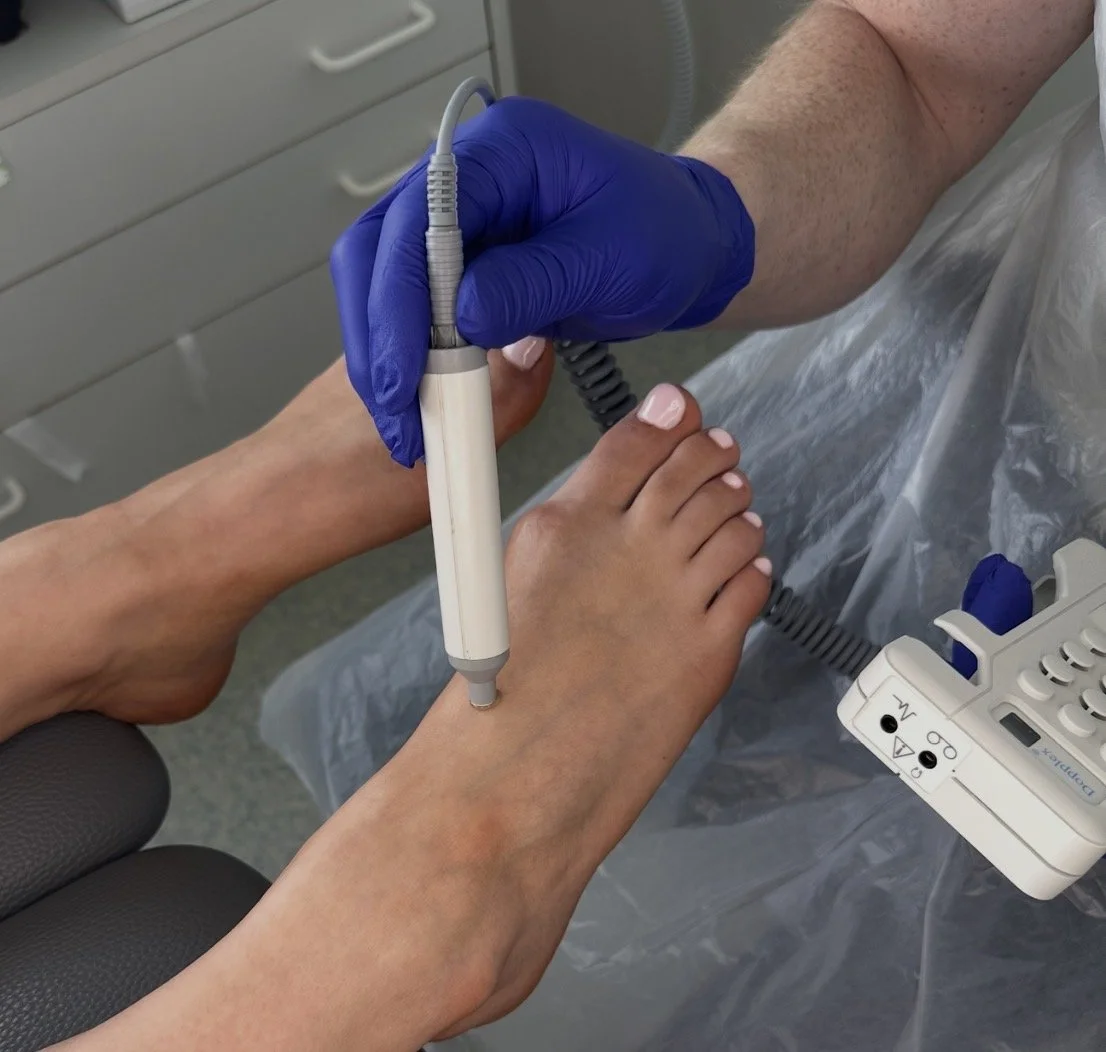
A diabetic foot assessment is a professional examination of your feet designed to identify potential complications associated with diabetes. The assessment typically includes checks of circulation, nerve sensation, skin condition and overall foot health to help identify any problems at an early stage.
-
Diabetes can affect both the circulation and nerve supply to the feet. This can make it harder to feel injuries, detect infections or heal wounds effectively. Regular foot assessments help identify problems early and reduce the risk of serious complications such as ulcers and infections.
-
During a diabetic foot assessment, we may:
Review your medical history
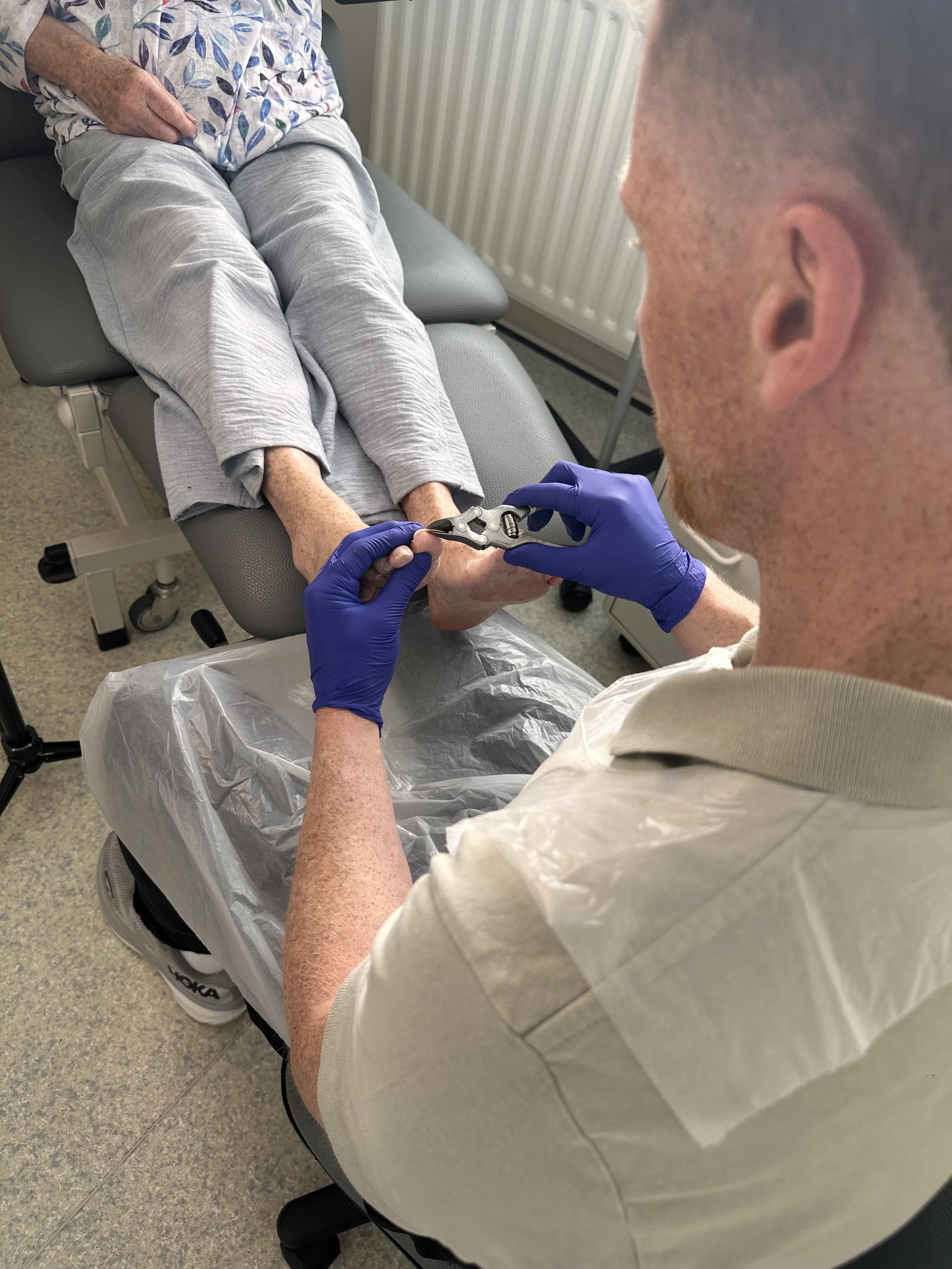
Examine your skin and nails
Assess circulation in your feet
Test sensation and nerve function
Identify pressure areas or signs of damage
Discuss footwear and foot care advice
The assessment helps us understand your level of risk and provide personalised recommendations for ongoing care.
-
You should seek professional advice if you notice:
Loss of sensation or numbness
Tingling or burning sensations
Cuts or wounds that are slow to heal
Swelling of the feet or ankles
Changes in skin colour or temperature
New areas of pain or discomfort
Signs of infection
Early assessment and treatment can help prevent more serious complications.